Experience vs Education
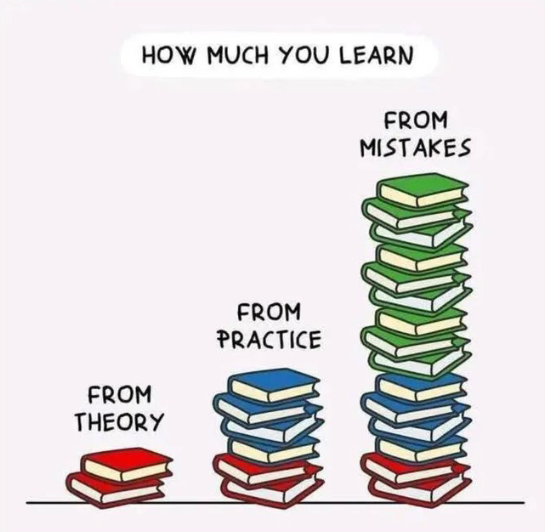
In today’s rapidly evolving professional landscape, the age-old debate between experience and education continues to spark discussions across industries. While both play crucial roles in career development, experience increasingly proves to be the more valuable asset. Let me explain why:
Formal education provides an essential foundation by introducing us to theoretical frameworks, developing critical thinking skills, and exposing us to diverse perspectives. It teaches us how to learn, research, and approach problems methodically. These are invaluable tools that serve as building blocks for future success.
However, experience transforms these theoretical foundations into practical wisdom. When troubleshooting a production system at 3 AM or navigating a challenging client negotiation, your experience – not your textbook knowledge – guides you.
Experience teaches lessons that no education in a classroom can replicate:
Real-world problem solving: While education teaches you what should work, experience shows you what actually works. It exposes you to edge cases, unexpected scenarios, and the messy reality of implementing solutions in imperfect conditions.
Adaptability: Experience forces you to constantly evolve. In technology, what you learned five years ago might be obsolete today. Experience teaches you how to adapt, pivot, and learn on the fly – skills that become increasingly crucial as technology advances at breakneck speed.
Professional judgment: Education gives you tools to make decisions, but experience helps you develop the intuition to make the right decisions quickly. It enables you to recognise patterns, anticipate problems before they occur, and understand the subtle nuances textbooks can’t capture.
Network building: Every project, every challenge, and every collaboration builds your professional network. These relationships, forged through shared experiences, often prove more valuable than any degree or certification.
Consider the technology sector, particularly cloud computing. While understanding Azure’s theoretical foundations is important, nothing compares to the knowledge gained from physically migrating systems, optimising costs, and resolving real-world issues. Each project adds layers of practical knowledge and wisdom that no training program can provide.
This isn’t to diminish the value of education. Instead, it’s about recognising that education serves as a launch pad, providing a structured learning environment and foundational knowledge, while experience is the rocket fuel that propels your career forward. The most successful professionals combine both, using their educational foundation to better understand and contextualise their experiences, creating a balanced, well-rounded professional.
The key lies in viewing education not as an end goal but as a starting point. The experience you gain afterwards – the challenges you overcome, the mistakes you learn from, and the successes you achieve – truly shapes your professional capabilities. It’s important to remember that learning doesn’t stop with a degree or a certification. Continuous learning through experience is what truly propels your career forward.
In conclusion, while education opens doors, experience teaches you how to walk through them confidently. Experience becomes your most reliable guide in an ever-changing professional landscape, empowering you to navigate uncertainty and adapt to new challenges with proven competence.