In an age where one weak line of code can expose billions, security negligence is no longer a risk — it’s a liability
We Ran a Security Scan—And What We Found Was Terrifying.
Let’s not sugarcoat it: when AZ Consult recently did a Grey Box Vulnerability scan for a major company handling sensitive client and financial data, the results were downright scary.
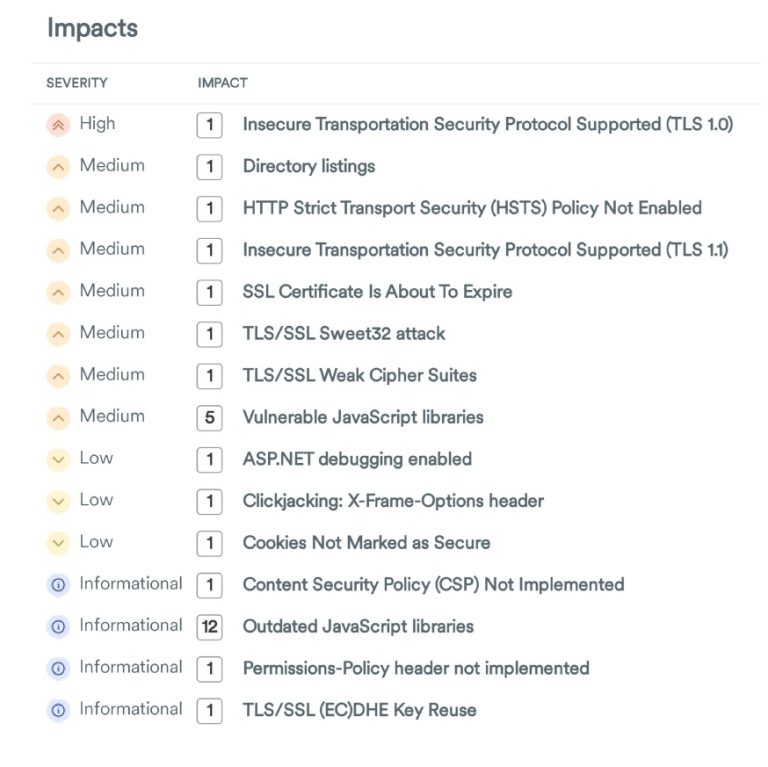
Forget the technical jargon for a second. That screenshot? It’s not just a bunch of “issues” for the IT team to sort out. It’s basically a treasure map for hackers—and a fast track to disaster for any business in South Africa’s tightly regulated financial, insurance, or FinOps sectors.
Every single item on that “Impacts” list—whether it’s an outdated TLS protocol or a vulnerable JavaScript library—is a ticking time bomb. And when one goes off, you’re not just paying for a few extra hours of developer overtime. You’re looking at millions of rands in fines, lawsuits, lost reputation, and scrambling to win back your customers’ trust.
The Real Price of “Medium Severity” Vulnerabilities
Let’s break down what we found:
- Insecure TLS 1.0 / 1.1 Support → High/Medium severity
- Vulnerable JavaScript Libraries (5 found) → Medium
- Outdated JS Libraries (12 found) → “Informational” (but don’t let that fool you!)
To the Financial Sector Conduct Authority (FSCA), the Prudential Authority, or the Information Regulator under POPIA, these aren’t just “nice-to-have” fixes. They’re serious control failures.
POPIA doesn’t care if a vulnerability is labelled “medium.” It cares if personal data gets exposed. If a hacker uses one of those outdated libraries to sneak malware into your online banking portal and grabs client ID numbers, bank details, or policy info, here’s what you’re suddenly dealing with:
- Mandatory notification to the Information Regulator (within 72 hours—no excuses)
- Up to R10 million in POPIA fines
- Class-action lawsuits from thousands of angry customers
- Regulators breathing down your neck, demanding quarterly audits
- Clients jumping ship to competitors who actually take security seriously
Insurance: Where One Breach Can Sink the Ship
Insurance companies are sitting on a goldmine of sensitive data—medical records, claims, beneficiaries, credit scores, you name it.
Think that “Clickjacking: X-Frame-Options header” issue is harmless? Think again. Attackers can use it to trick users into clicking invisible buttons—like approving fake claims or changing beneficiary details without even realizing it.
And if you’ve got “ASP.NET debugging enabled,” you’re basically handing hackers a blueprint of your entire application. In 2023, a Johannesburg insurer coughed up R8.2 million after a breach that started with an unsecured debug endpoint. The worst part? Their own audit team flagged the problem six months earlier. It was marked as “low priority.” Ouch.
Legal Liability Isn’t Just a Theory—It’s Happening Right Now
South African courts aren’t messing around anymore. Companies are being held responsible for breaches they could have prevented. Just look at these real-world examples:
- In 2024, a major healthcare insurer was slapped with a R15 million penalty after failing to patch known vulnerabilities. The result? A data leak that hit 200,000 policyholders.
- A FinTech startup lost its banking license after regulators found more than a dozen “informational” vulnerabilities—like missing CSP headers and key reuse—that together created a hacker’s playground.
Regulators don’t care if you “didn’t know” or thought something was “low severity.” Their question is simple: Did you do what any reasonable, responsible business should have done?
Still using outdated libraries? Skipping HSTS? Allowing weak ciphers? That’s not just negligence—it’s reckless.
From Risk to Resilience: The Next Moves for Industry Leaders
Treat Every Vulnerability Like a Regulatory Violation – Even those “informational” findings can turn into legal nightmares. Automate your scans and fix issues based on how sensitive the data is—not just the CVSS score.
Embrace Zero Trust Architecture – Assume you’ve already been breached. Segment your networks, enforce multi-factor authentication, and keep a close eye on who’s accessing your customer data.
Make Secure Coding and DevSecOps Non-Negotiable – Build security checks right into your CI/CD pipeline. No code gets shipped unless it passes. Developers need to own security—not just the IT team.
Get Third-Party Audits Every Quarter – This is especially important for cloud providers, APIs, and vendor SDKs. Your risk doesn’t stop at your own codebase.
Train Everyone—From the Boardroom to DevOps – Security isn’t just an IT problem. It’s about keeping your business alive. Even board members should know that one unpatched library can cost you R10 million or more.
The reality check: Prevention Is Cheap. Recovery Is Brutal.
That screenshot? It’s not just a technical report—it’s a giant warning sign.
In South Africa’s financial world, trust is everything and compliance isn’t optional. Bad code isn’t just a tech issue—it’s a business killer.
Don’t wait for a regulator to come knocking. Don’t wait to see your company’s name in the headlines for all the wrong reasons: “XYZ Insurer Pays R12 Million After Data Leak.”
Fix it now. Patch it now. Audit it now.
Because in 2025, ignoring these problems won’t just leave you with technical debt—it could mean financial disaster.